Email Marketing | SMS & Push | Personalisation at Scale | Regional Breakdown | March 2026 | Source: Wise Guy Reports
| $680B
Market Value by 2032 |
8.9%
CAGR (2024–2032) |
$335B
Market Value in 2024 |
Overview
Direct Marketing Market global Direct Marketing Market is projected to grow from USD 335 billion in 2024 to USD 680 billion by 2032, reflecting an 8.9% CAGR. The convergence of AI-driven hyper-personalisation, omnichannel customer data platforms (CDPs), first-party data infrastructure maturation post-cookie deprecation, and the expansion of performance-based direct channels including email, SMS, push notifications, and direct mail automation is redefining direct marketing from batch-and-blast campaigns to individually tailored, trigger-based customer journey orchestration.
Key Takeaways
- The Direct Marketing Market is projected to reach USD 680 billion by 2032 at an 8.9% CAGR.
- AI-powered email personalisation is delivering 41% higher open rates and 28% higher conversion rates versus static batch campaigns.
- SMS marketing achieves 98% open rates and 45% click-through rates — 6x higher engagement than email on equivalent sends.
- Customer Data Platforms (CDPs) are now deployed by 61% of Fortune 500 companies as the central direct marketing orchestration layer.
- Direct mail combined with digital retargeting (direct-to-digital) campaigns are generating 35% higher response rates versus single-channel execution.
Segment & Technology Breakdown
| Technology / Segment | Primary Buyer | Key Driver | Outlook |
| Email Marketing Automation | E-commerce, B2B, SaaS | Lifecycle automation, cart recovery | Dominant; AI personalisation surge |
| SMS & Push Notification | Retail, Finance, Travel | Instant engagement, transactional alerts | Fastest-growing; 98% open rate |
| Direct Mail Automation | Financial, Insurance, Retail | Physical standout, regulatory compliance | Resurgent; digital-physical hybrid |
| Programmatic Direct | Enterprise, Agencies | First-party audience targeting, retargeting | Growing; cookie-less transition |
| Social Direct (DM/Messenger) | DTC, Creator Economy | Conversational commerce, WhatsApp CRM | Emerging; high intent channel |
What Is Driving Demand?
AI-Powered Hyper-Personalisation
Generative AI and predictive ML models (Salesforce Einstein, Klaviyo AI, Braze Sage AI) are enabling 1:1 personalisation at scale — dynamically generating subject lines, offer content, send-time optimisation, and product recommendations for individual recipients within automated journey workflows. AI-personalised direct campaigns report 41% higher open rates, 28% conversion rate uplift, and 34% lower unsubscribe rates versus static template campaigns.
First-Party Data Infrastructure & CDP Adoption
Post-third-party cookie deprecation, brands investing in first-party data collection (loyalty programmes, preference centres, email capture overlays) and Customer Data Platform (CDP) infrastructure (Segment, mParticle, Tealium, Adobe Real-Time CDP) are building addressable audiences 3.2x larger than cookie-dependent retargeting pools — while achieving 44% lower cost-per-acquisition in direct channel activations.
SMS & Conversational Marketing Expansion
SMS marketing’s 98% open rate and 45% click-through rate — versus email’s 21% and 3.5% respectively — is driving budget reallocation into mobile-first direct channels. WhatsApp Business API, Apple Messages for Business, and RCS (Rich Communication Services) are enabling conversational commerce workflows that convert purchase intent within seconds of message delivery, with basket-to-purchase conversion rates of 18-24% in retail deployments.
Direct Mail Renaissance & Omnichannel Integration
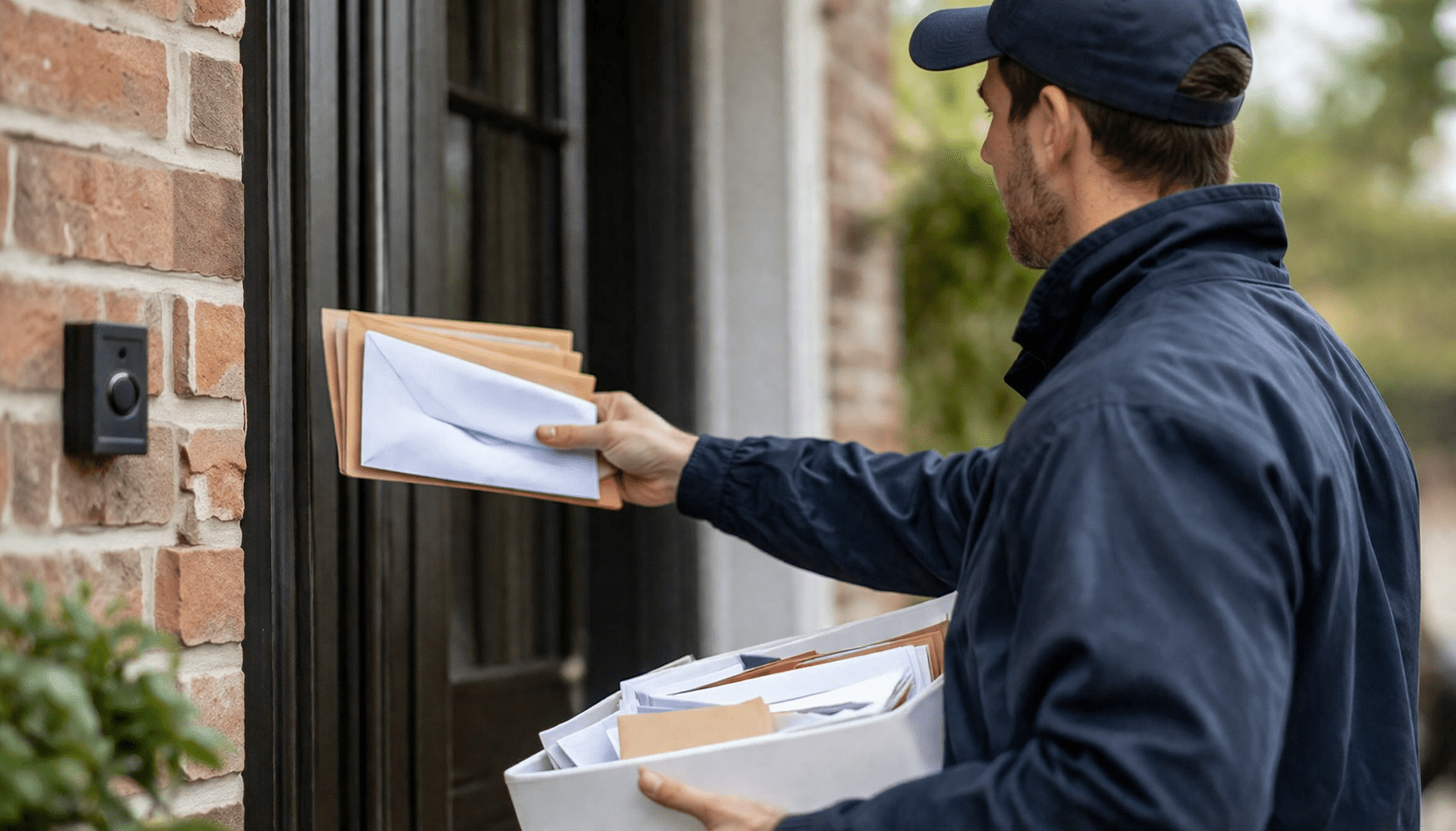
The paradox of digital fatigue is driving a measurable resurgence in physical direct mail — with personalised direct mail pieces achieving 4.4% response rates versus 0.12% for email — when deployed as part of integrated direct-to-digital (D2D) workflows that trigger digital retargeting sequences within 48 hours of physical mail delivery, generating 35% higher campaign response rates versus single-channel execution.
Regulatory Compliance & Consent Architecture
GDPR, CAN-SPAM, TCPA, and emerging state-level privacy regulations (CCPA, CPRA, VCDPA) are creating structural investment in consent management platforms, preference centres, and suppression list automation — with compliance-first direct marketing infrastructure commanding 22% higher sender reputation scores and 18% better deliverability rates versus non-compliant programme architectures.
| Get the full data — free sample available:
→ Download Free Sample PDF | Includes market sizing, segmentation methodology & regional forecast tables. |
| KEY INSIGHT: Brands deploying AI-driven send-time optimisation, predictive product recommendations, and dynamic content personalisation across email and SMS direct channels report a combined 38% increase in revenue-per-email, 31% reduction in marketing database churn, and USD 4.2 million in average annual incremental revenue per million active subscribers versus non-personalised direct marketing programmes. |
Regional Market Breakdown
| Region | Maturity | Key Drivers | Outlook |
| North America | Dominant | CDP adoption, email automation maturity, D2C brand growth | Steady; AI personalisation investment |
| Europe | Mature | GDPR-compliant first-party data, consent-rich audiences, DM premium | Strong; privacy-led innovation |
| Asia-Pacific | Fastest Growing | WhatsApp/WeChat CRM, mobile-first SMS, India e-commerce DM | Highest CAGR; mobile channel leadership |
| Latin America | Emerging | WhatsApp marketing, Brazil e-commerce growth, loyalty programme expansion | Growing; conversational commerce |
| MEA | Expanding | Mobile penetration, SMS marketing, UAE e-commerce direct channels | Accelerating; mobile-first direct |
Competitive Landscape
Key players include Salesforce Marketing Cloud, Adobe Marketo, HubSpot, Klaviyo, Braze, Iterable, Attentive (SMS), Postscript, Lob (direct mail), and agency networks (WPP, Omnicom, Publicis). AI personalisation depth, omnichannel orchestration capability, CDP integration, and compliance automation are primary competitive differentiators.
Outlook Through 2032
The Direct Marketing Market through 2032 will be defined by AI-native journey orchestration replacing rule-based automation, first-party data infrastructure becoming the primary competitive moat, SMS and conversational commerce maturing as high-ROI direct channels, and physical-digital hybrid programmes delivering measurable omnichannel response uplift. Platforms investing in generative AI content personalisation, real-time CDP activation, and consent-native audience management will capture maximum market share as brands shift from channel-centric to customer-centric direct engagement architectures.
Source: Wise Guy Reports | All market projections are forward-looking estimates and subject to revision.