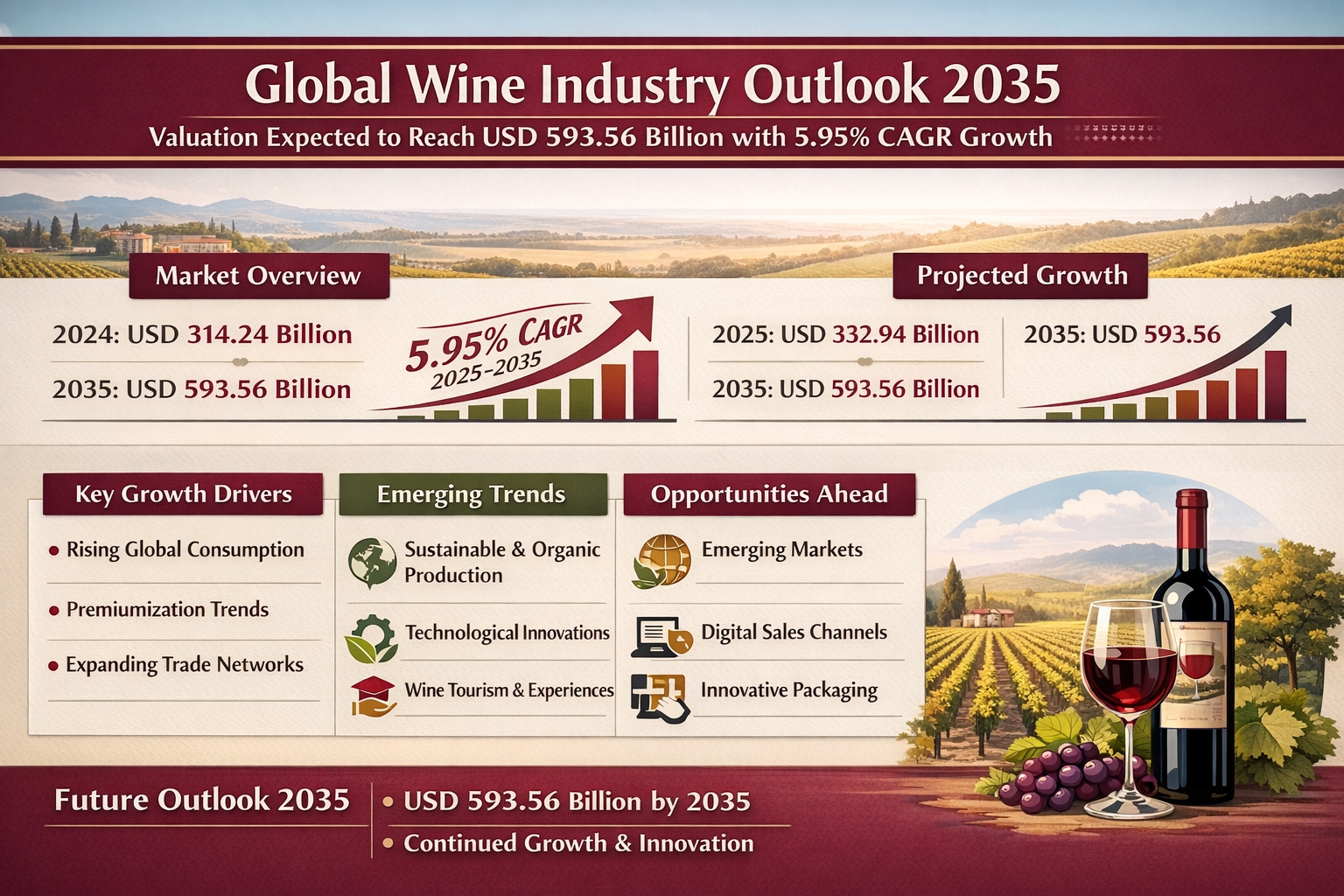
The global wine industry continues to evolve as changing lifestyles, expanding international trade, and growing consumer appreciation for premium beverages shape its development. According to recent industry analysis, the wine sector was valued at approximately USD 314.24 billion in 2024 and is projected to increase from USD 332.94 billion in 2025 to nearly USD 593.56 billion by 2035. This progression reflects a compound annual growth rate (CAGR) of about 5.95% during the forecast period. As consumers increasingly explore new varieties and regional flavors, the industry is experiencing a transformation marked by innovation, sustainability, and premium product offerings.
Market Overview and Industry Landscape
The wine industry has become one of the most dynamic segments within the global beverage ecosystem. Production, distribution, and consumption patterns have diversified significantly over the past decade, supported by technological improvements in viticulture and winemaking processes. Increasing global connectivity has also allowed wineries to expand their reach to emerging markets where wine culture is gaining popularity. Countries that historically had limited exposure to wine consumption are now witnessing growing demand, supported by rising disposable incomes and evolving social trends. As a result, producers are focusing on product differentiation, branding strategies, and international distribution channels to capture a wider consumer base.
“Request Free Sample” – Obtain a complimentary sample of our report to assess its quality and relevance to your requirements https://www.marketresearchfuture.com/sample_request/1655
Another key factor shaping the industry landscape is the increasing focus on regional authenticity and heritage-driven production. Consumers today are not only interested in the taste profile of wines but also in their origin, production methods, and the story behind each bottle. This shift has encouraged wineries to highlight terroir characteristics, traditional cultivation techniques, and sustainable vineyard practices, further strengthening brand identity across global markets.
Key Growth Drivers Influencing Industry Expansion
Rising Global Consumption and Lifestyle Changes
One of the primary drivers of industry expansion is the gradual shift in consumer lifestyle preferences. Wine is increasingly perceived as a sophisticated and culturally connected beverage that complements social gatherings, culinary experiences, and leisure activities. Younger consumers, particularly in urban environments, are exploring different wine styles, which is contributing to broader market acceptance and growth.
Premiumization and Product Innovation
Premium and high-quality wines are gaining traction among consumers seeking refined taste experiences. Wineries are investing in research, advanced fermentation techniques, and innovative aging processes to develop distinctive flavor profiles. Limited-edition releases, vintage collections, and region-specific varieties are helping producers strengthen their premium positioning while attracting collectors and enthusiasts.
Expanding International Trade Networks
Global trade has played a crucial role in facilitating the distribution of wine products across continents. Export-oriented wineries are increasingly targeting new markets through partnerships with distributors, hospitality businesses, and specialized retail channels. Digital commerce platforms have also enabled wineries to reach consumers directly, creating new opportunities for brand visibility and revenue generation.
Emerging Industry Trends and Developments
Growing Popularity of Sustainable and Organic Production
Sustainability has become an essential component of modern wine production. Vineyards are implementing environmentally responsible practices such as organic cultivation, water conservation, and eco-friendly packaging solutions. These initiatives align with consumer demand for ethically produced beverages while contributing to long-term environmental preservation.
Technological Integration in Viticulture and Production
Advanced technologies are transforming vineyard management and winemaking processes. Precision agriculture, data analytics, and climate monitoring tools allow producers to optimize grape quality and improve production efficiency. Automation in bottling and packaging has also enhanced consistency and reduced operational costs across the supply chain.
Influence of Tourism and Experiential Marketing
Wine tourism has emerged as an important element of brand engagement. Vineyards and wineries are creating immersive visitor experiences through tasting events, vineyard tours, and educational workshops. These initiatives help strengthen consumer loyalty while promoting regional wine culture and heritage.
“Proceed to Buy” – Move forward with your purchase and gain instant access to the complete report https://www.marketresearchfuture.com/checkout?currency=one_user-USD&report_id=1655
Industry News and Notable Developments
Recent developments within the global wine sector highlight how producers are adapting to evolving consumer expectations and competitive pressures. Several wineries have introduced innovative blends and experimental fermentation techniques to appeal to younger audiences seeking unique flavor experiences. At the same time, partnerships between vineyards and hospitality groups have expanded opportunities for curated dining experiences that emphasize wine pairing and culinary storytelling.
Additionally, investments in sustainable vineyard infrastructure and climate-resilient grape varieties are gaining momentum across major producing regions. These initiatives reflect the industry’s commitment to maintaining production stability while addressing environmental challenges that may influence future harvest cycles.
Opportunities Shaping the Future of the Wine Industry
Growth Potential in Emerging Consumer Markets
Developing economies are becoming increasingly important for wine producers seeking long-term expansion. Rising urbanization, higher disposable incomes, and exposure to global culinary trends are encouraging consumers in these regions to experiment with wine consumption. Strategic marketing initiatives and localized product offerings are expected to accelerate adoption rates in these markets.
Digital Transformation and Direct-to-Consumer Sales
Online retail platforms and digital marketing strategies are reshaping how wine is promoted and sold. Producers are utilizing virtual tastings, subscription models, and e-commerce channels to engage directly with consumers. This approach reduces reliance on traditional intermediaries while enabling wineries to build stronger relationships with their customer base.
Innovation in Packaging and Product Formats
Alternative packaging solutions such as lightweight bottles, eco-friendly containers, and convenient serving formats are becoming increasingly popular. These innovations address sustainability concerns while making wine more accessible to a broader range of consumers, particularly those seeking convenience without compromising quality.
“Browse Report” – Explore the report’s contents, sections, and key insights by browsing through its detailed information https://www.marketresearchfuture.com/reports/wine-market-1655
Future Outlook
The outlook for the global wine industry remains positive as evolving consumer tastes, technological advancements, and expanding trade networks continue to shape its trajectory. By 2035, the sector is expected to reach approximately USD 593.56 billion, supported by consistent demand growth and strategic innovation across the value chain. Producers that focus on sustainability, product differentiation, and experiential marketing are likely to gain a competitive advantage in the evolving marketplace.
As consumer interest in diverse wine varieties and premium experiences continues to expand, the industry is poised to maintain steady growth over the coming decade. The combination of cultural heritage, modern production techniques, and global connectivity ensures that wine will remain a significant and influential segment within the international beverage landscape.
The global wine industry continues to evolve as changing lifestyles, expanding international trade, and growing consumer appreciation for premium beverages shape its development. According to recent industry analysis, the wine sector was valued at approximately USD 314.24 billion in 2024 and is projected to increase from USD 332.94 billion in 2025 to nearly USD 593.56 billion by 2035. This progression reflects a compound annual growth rate (CAGR) of about 5.95% during the forecast period. As consumers increasingly explore new varieties and regional flavors, the industry is experiencing a transformation marked by innovation, sustainability, and premium product offerings.
Discover more research Reports on Food, Beverages & Nutrition by Market Research Future:
Sparkling Wine Market Size, Share, Industry Report, Analysis by2035
Luxury Wines and Spirits Market Size, Share, Industry Analysis By 2035
Craft Wine Market Size, Share, Trends, Industry Reports
Red Wine Market Analysis, Size, Share, Trends, Industry Report
Fortified Wine Market Analysis, Size, Share, Industry Growth 2035
Still Wine Market Demand, Size, Share, Report, Forecast 2035
Single Serve Wine Market Size, Share, Trends Analysis By 2035
Port Wine Market Size, Share, Trends, Industry Reports, 2035
Canned Wine Market Outlook, Size, Industry, Share, Growth
Tonic Wine Market Size, Share, Demand, Report Forecast 2035
About Market Research Future
At Market Research Future (MRFR), we enable our customers to unravel the complexity of various industries through our Cooked Research Report (CRR), Half-Cooked Research Reports (HCRR), Raw Research Reports (3R), Continuous-Feed Research (CFR), and Market Research Consulting Services. The MRFR team have a supreme objective to provide the optimum quality market research and intelligence services for our clients. Our market research studies by Components, Application, Logistics and market players for global, regional, and country level market segments enable our clients to see more, know more, and do more, which help to answer all their most important questions.
Contact
Market Research Future®
99 Hudson Street,5Th Floor
New York, New York 10013
United States of America
Phone
+1 628 258 0071(US)
+44 2035 002 764(UK)
Email: sales@marketresearchfuture.com
Website: https://www.marketresearchfuture.com